
UTC’s Literacy First pilot program pairs aspiring educators with young readers — and changes both in the process.
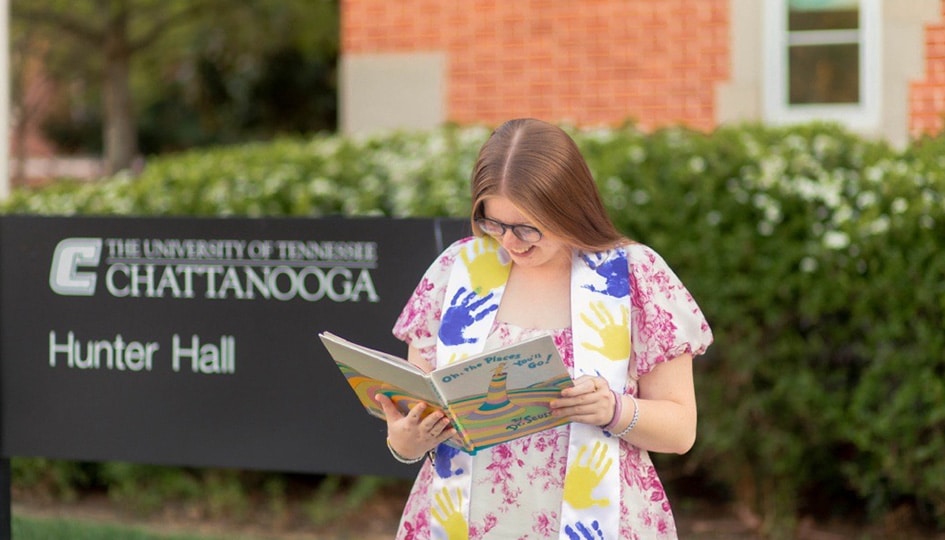
On any given morning inside Brown Academy, a Hamilton County elementary school, learning to read is no longer a solitary struggle for Chattanooga’s youngest students. Instead, it unfolds one-on-one — guided, intentional and deeply personal — through the University of Tennessee at Chattanooga’s Literacy First Student Tutors Program.
Now completing its first year as a pilot, the program is already gaining momentum. Built as a yearlong, high-impact experience, it places UTC education students in kindergarten through first-grade classrooms, where they deliver individualized, research-based literacy instruction using the Literacy First model: a structured approach that helps young readers build foundational skills in phonics, fluency and reading comprehension.
The effort is more than a field placement; it’s a coordinated response to early literacy gaps, made possible through partnerships with Hamilton County Schools, Literacy First, Chattanooga 2.0 and Brown Academy.
For the students being served, the impact is immediate. For future educators leading the work, it’s transformative.
A Personal Journey Comes Full Circle
“I had never taught a child how to read before,” said Kendell Wedekind, May 2026 graduate in Elementary Education and ESL, and participant in the pilot program. “Learning how to recognize what they’re struggling with — that’s hard, but this taught me how.”
For Wedekind, the work is also deeply personal.
“I wasn’t a good reader,” she said. “I had to go to tutoring in second grade, but the person who worked with me made it fun. She just made me love it!”
That early experience stayed with her.
“When I applied, I told my story,” Wedekind said. “I said, ‘I’ve been through this. I understand what these kids are going through.’”
Learning By Doing
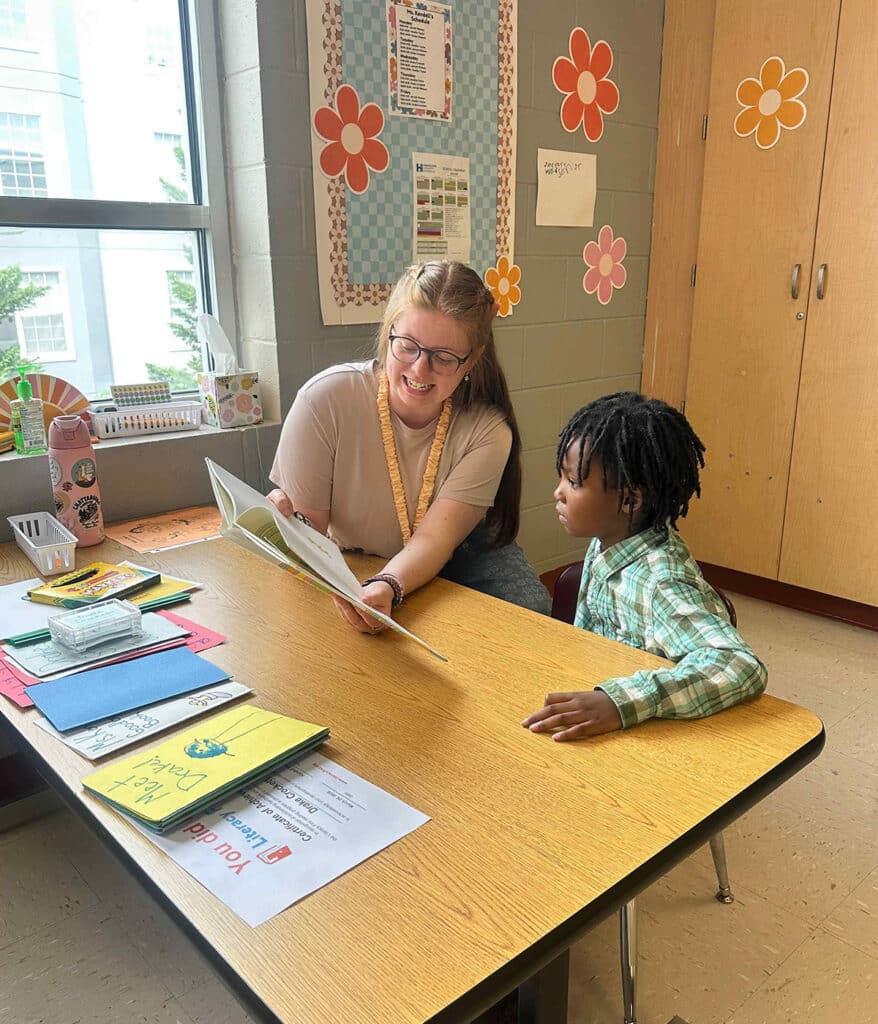
Teacher candidates in the program complete more than 130 hours of structured tutoring, working one-on-one with students for 30-minute sessions throughout the school day. This year, five teacher candidates, like Wedekind, balanced tutoring with full-time student teaching.
“It was so precious to be one-on-one with those kids,” she said. “I was building real relationships with students. They knew they were safe. They knew what to expect from me, and that changed everything.”
Each tutoring session follows a structured model that sets expectations before moving into phonics, reading and fluency exercises. Progress is monitored weekly, allowing tutors to track growth and adapt instruction to each student’s needs.
Unlike traditional classroom observations, the program gives future teachers responsibility for delivering instruction, monitoring progress and adjusting lessons based on student needs.
Moments That Mark Progress
Over the course of the year, Wedekind worked with five of the 15 kindergarten and first-grade students served by the program. She saw measurable growth in each one.
“They all grew at different paces, but the curriculum worked for every one of them,” she said.
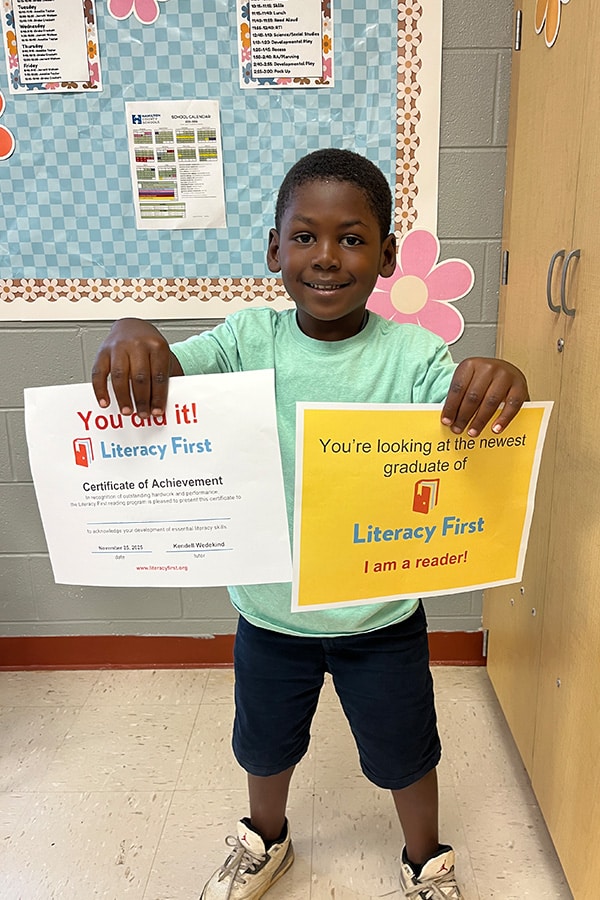
One moment in particular has stayed with her. “My first student graduated right before Thanksgiving,” she said. “It was my last day of tutoring that semester. That was a big moment.”
When students meet their literacy benchmarks, demonstrating knowledge of letter sounds and sight words through timed assessments, they “graduate” from the program through a final lesson designed to celebrate their progress.
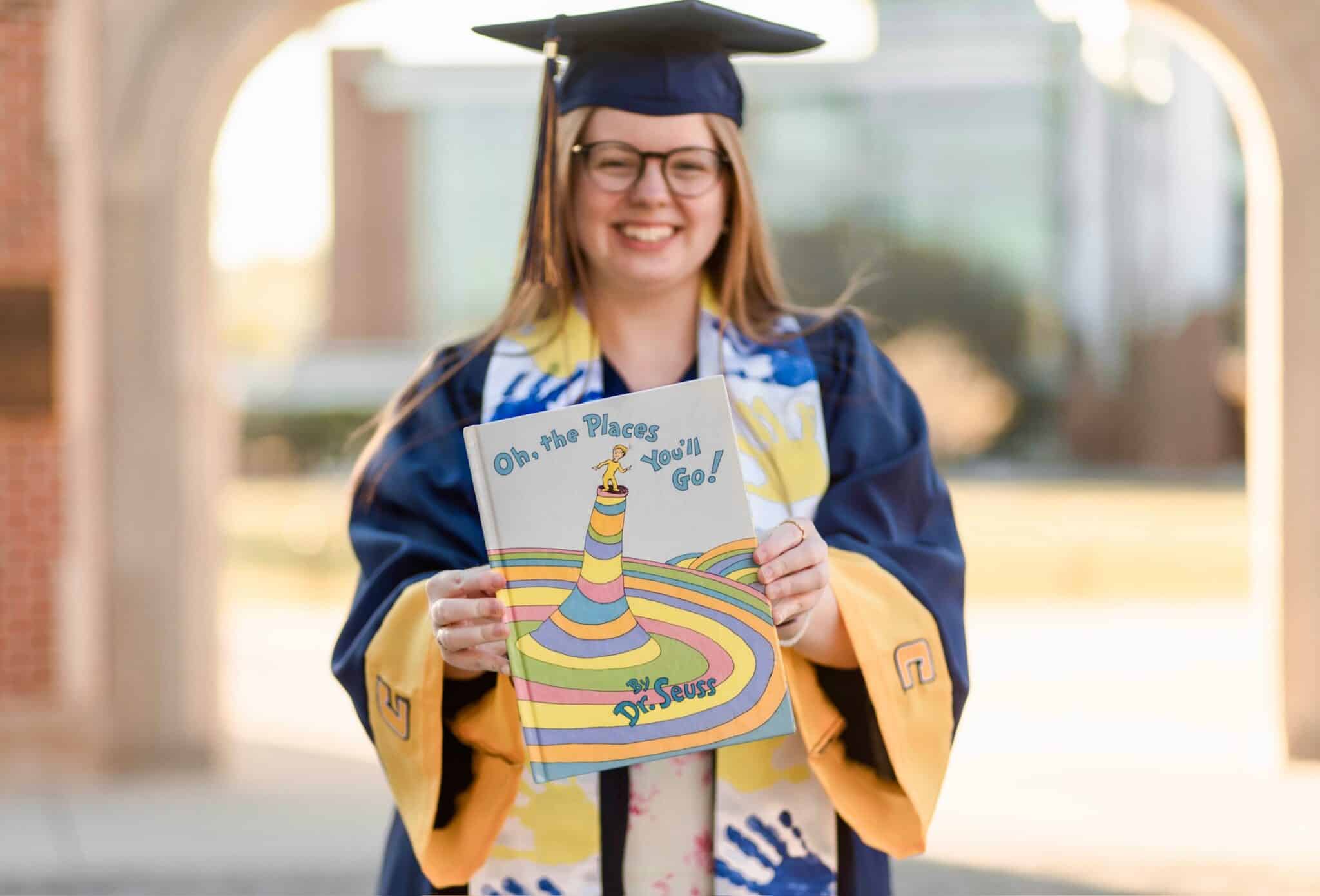
“We did a goodbye lesson,” Wedekind said. “I made a book about my favorite things we did together, and they made their own. We read ‘Oh, the Places You’ll Go,’ and seeing what they wrote back to me… it was just so special.”
Beyond academic growth, the relationships built through consistent, one-on-one time often lead to deeper engagement. “It made them care more about reading, because they knew I cared,” she said.
A Network Behind the Work
The program is led by Dr. Yvette Hairston, UTC assistant professor and literacy director, whose decades of experience in education have shaped its focus on both student outcomes and teacher preparation.
“I believe in the power of relationships,” said Dr. Hairston. “Through them, I became a great teacher, and now I am dedicated to preparing these future teachers in that same way. Lucky for me, I get this opportunity to pay it forward.”
Wedekind remembers that same approach from her time as a student in Dr. Hairston’s classroom.
“She made it a point to know every student,” Wedekind said. “That stuck with me.”
That same intentionality extends into the structure of the program, which provides teacher candidates with multiple layers of support, including coaching from Hamilton County Schools and Literacy First staff.
“I felt so supported,” Wedekind said. “I had coaches, people I could reach out to anytime. They never made me feel dumb for asking questions.”
I had never taught a child how to read before. Learning how to recognize what they’re struggling with — that’s hard, but this taught me how.
Kendell Wedekind
Class of 2026
Building the Future of Literacy Education
With plans already underway for an expanded cohort in Fall 2026 semester, the program is positioning itself as both a pipeline for well-prepared educators and a critical support system for early literacy. While students build confidence as readers, UTC teacher candidates gain hands-on experience that many educators do not encounter until their first years in the classroom.
For Wedekind, the experience has already reshaped how she approaches teaching, especially the emphasis on clear expectations and student engagement. This fall, she will begin her career as a kindergarten teacher at East Brainerd Elementary School.
“I’ve seen it work. It’s not just ‘Can you read?’” she said. “It’s ‘Do you want to read?’… and that’s what makes the difference.”
Looking back, she said the demands of the program, while challenging, were worth it.
“Do it,” she said to any student considering applying for the program. “The time commitment and stress at first is worth it. How much you put into it is exactly what you’ll get out of it.”
And for the students at Brown Academy, that investment is already paying off — one reader at a time.
Know a teacher candidate interested in the UTC Literacy First Student Tutoring Program?
Contact program director, Dr. Yvette Hairston, at yvette-stewart@utc.edu for more information.
Learn More